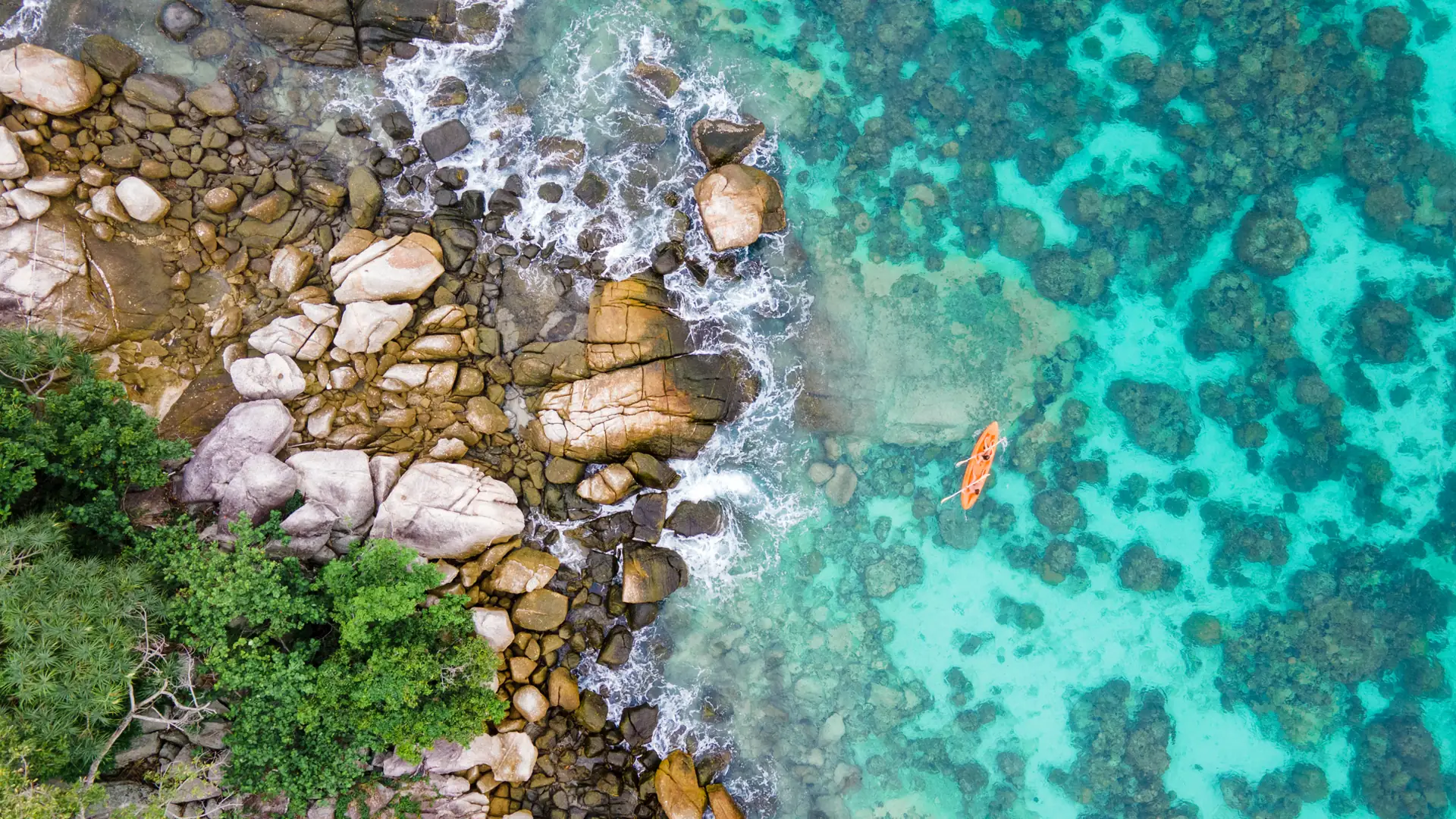
From the sand at Sunrise Beach, the sea looks simple: a wide band of blue, a few longtail boats, and the small islands of Koh Usen and Koh Kra resting on the horizon. Put on a mask and the picture changes completely. The reef off Koh Lipe is not somewhere you travel to. It begins a few steps from your bungalow.
The reef at your doorstep
The shallowest water is a good place to start. Close to the beach, the bottom is a mix of sand, pebbles and dark rocks, with small fish flickering between them. A little further out, the first coral heads appear. On a calm morning the light is clear enough to read the shapes from the surface, and the water is usually at its gentlest before the wind picks up.
This is also the safest time to go in. The sea is cooler, the day boats have not yet arrived, and it is easier to find a quiet patch of water. We can check the tide and the current with you, show you the easiest way in, and lend masks, snorkels and fins if you do not have your own. If you would rather stay dry on top, a kayak lets you follow the rocky edge without getting your hair wet.
Nothing on the reef needs to be rearranged. The best thing a snorkeller can do is float, watch, and leave everything exactly where it is.
A world of small things
Koh Lipe sits at the southern edge of Tarutao National Park, in the Adang-Rawi group of islands. The reef here is not one long wall of colour. It is a patchwork of coral heads, sand channels, seagrass and rocky edges, and each part has its own residents.
Look into the anemones and you may find clownfish, small and bright against the soft tentacles. Butterflyfish and angelfish move in pairs, parrotfish scrape at the coral, and wrasse dart between the branches. Near the sand you might spot gobies, blennies or a shy moray eel watching from a ledge. A little deeper, groupers and snappers hold their ground while sea urchins and giant clams sit quietly among the coral.
The larger visitors are never guaranteed. A green turtle may glide past. A ray may lift from the sand. A blacktip reef shark may cross the edge of the reef and pay you no attention at all. These are the encounters guests remember most, not because they are dramatic, but because they are brief and completely wild. Keep your distance, stay still and let the animal decide how close it wants to come.
Patience makes the difference. The reef rewards the snorkeller who stops and studies one small patch instead of racing from one side of the bay to the other. Many of the best sightings are no bigger than a fingernail.
Snorkelling with care
Coral is alive, slow-growing and easily broken. A careless fin kick, a hand pressed down for balance, or a foot placed on the reef can undo years of growth. The rule is simple: look, but do not touch. Keep your body horizontal, kick gently, and leave enough room that your fins never brush the coral.
Please do not feed the fish, chase turtles or pick anything up. Shells, coral fragments and even small stones are part of the reef and the beach, and they should stay there for the next visitor. If you wear sunscreen, choose a reef-safe product or cover up with a rash vest and hat instead. Take your rubbish back to the beach, including anything that blows out of a bag.
If you are new to snorkelling, tell us before you go in. We will run through the basics, make sure your mask fits and suggest a route that matches the conditions. Swim with a buddy, stay inside the calm area, and wear a life jacket if you are not a confident swimmer. The sea is friendly here, but it still deserves respect.
Beyond Sunrise Beach
The two islands you can see from the beach, Koh Usen and Koh Kra, are covered in more detail in our guide to snorkelling around Koh Usen and Koh Kra. Both are within easy reach when the sea is calm, and each shows you a different face of the reef.
For a longer day, a local Chao Ley boatman can take you further along the coast, with stops for snorkelling and a quiet beach. Our piece on island hopping in Tarutao National Park describes what those trips look like. We can arrange a private boat for your family or friends, or a shared trip if you would like to join a group. For scuba diving we recommend Forra Dive, and we are happy to put you in touch. Ask at reception the day before so we can check the tide and the weather with you.
Back on the sand, the day returns to its usual rhythm: a rinse under the shower, something cold to drink, maybe a long lunch while the boats move slowly across the bay. The reef is only a few steps away, but it feels like another world. We look forward to showing you where to start.